Lab note
Hard Water vs Soft Water
Hard water carries more dissolved calcium and magnesium; soft water carries less. In the words of the Minnesota Department of Health (MDH), “Soft water contains lower levels of calcium and/or magnesium than hard water.” In practice, hard water leaves scale in kettles and water heaters, spots on glasses and soap scum in the tub. Softened water mostly avoids those, but a salt-based softener adds sodium, uses salt and water to regenerate, and needs upkeep. Whether to soften depends on your number; see the last section.
Water can be naturally soft, or softened at home by an ion-exchange softener. MDH: “Resin beads inside the softener trap the calcium and magnesium and exchange them for sodium or potassium.”
Side by side
| Hard water | Water from a salt-based softener | |
|---|---|---|
| Minerals | High in calcium and magnesium (USGS) | Calcium and magnesium swapped for sodium or potassium (MDH) |
| Scale | Forms when water is heated, e.g. in a water heater (USGS) | “Prevents build-up of minerals (scale) on the inside of pipes, fixtures, and hot water heaters” (MDH) |
| Soap | Forms “soap scum”; more soap or detergent needed (USGS) | “Prevents or reduces soap films and detergent curds in sinks, bathtubs, and washing machines” (MDH) |
| Glassware | Spots or film after the dishwasher (USGS) | “Reduces or prevents mineral spots on glassware” (MDH) |
| Appliances | Scale can shorten equipment life (USGS) | “Lengthens the life of some appliances” (MDH) |
| Sodium | — | Added: “about 8 mg/L for each grain per gallon” of hardness (Nebraska Extension) |
| Pipes | Scale can narrow pipes over time (USGS) | “Can corrode your pipes” (MDH; see below) |
| Upkeep | — | Salt, regular testing and maintenance (MDH); about 50 gallons of water per regeneration (Penn State) |
| Contaminants | — | Softening “does not remove bacteria, hydrogen sulfide, silt or sand, lead, nitrate, pesticides” and many other compounds (Nebraska Extension) |
Scale and appliances
Scale is the main practical difference. USGS says that when hard water is heated, “solid deposits of calcium carbonate can form,” and that this scale “can reduce the life of equipment, raise the costs of heating the water, lower the efficiency of electric water heaters, and clog pipes.” Nebraska Extension says scale in the water heater can “slow the heating process and increase energy usage.” Penn State Extension adds that scales “can also build up on hot water heaters and decrease their useful life.”
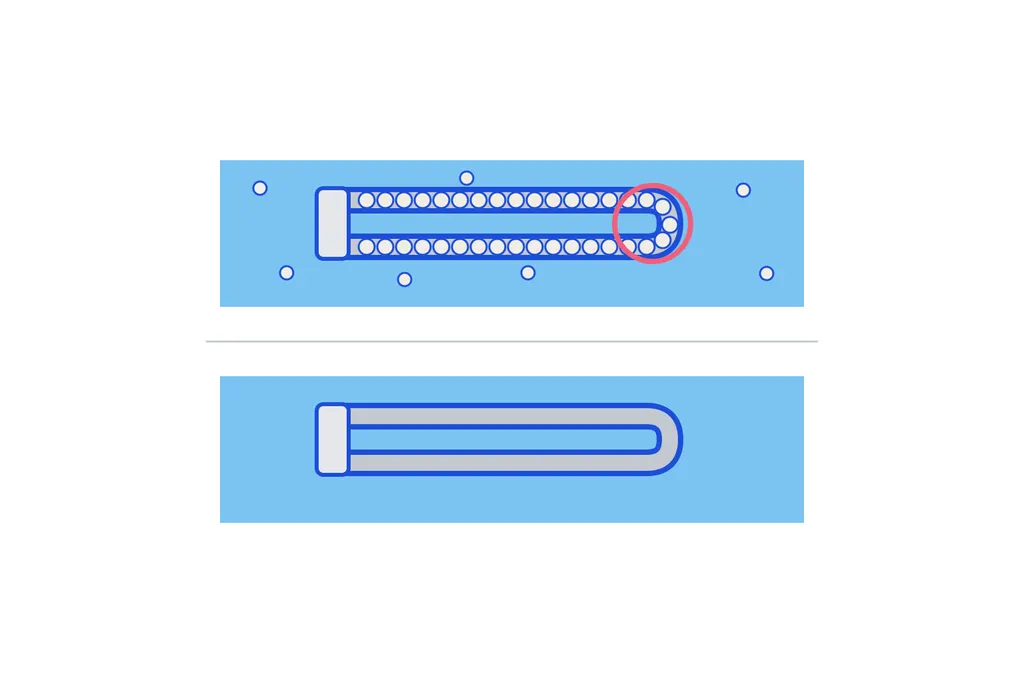
How much scale you get depends on your hardness number (see the last section).
Soap and cleaning
In hard water, USGS explains, “soap reacts with the calcium (which is relatively high in hard water) to form ‘soap scum,’” and “more soap or detergent is needed to get things clean.” Nebraska Extension mentions clothes that “may become dingy and gray with time,” spotted glassware, and films on shower doors and tubs. Penn State says soap film and detergent curds mean “you are not getting the maximum cleaning action from these products.”
Softer isn’t always better here, either. USGS notes that “Water that is too soft also can be a nuisance, because ions react with the soap to produce a residue that is difficult to wash off.”
Downsides of softened water
Four of the disadvantages MDH lists, quoted as written (sodium, the fifth, is covered below):
- “Can corrode your pipes. The corroded metal from the pipes can end up in your water. This can contribute to elevated lead and copper levels in drinking water.”
- “Regular testing of the water and maintenance of the softener is necessary to make sure the softener is working properly.”
- “Negative impacts to the environment from salt use.”
- “The water used to regenerate the softener beads ends up as waste.”
If you’re concerned about lead or copper, test through a state-certified lab and ask your state or local health department.
If you’re on city water, check whether the utility already softens it. MDH says “Soft water provided by a utility does not need additional softening and may cause corrosion issues for your home.”
On wastewater, Penn State estimates “about 50 gallons of water are used for each regeneration cycle,” which “may or may not cause hydraulic overload of the septic system.” In Minnesota, MDH says the state “has a growing problem with chloride in water” and that the chloride waste from home softeners goes “down the drain and ultimately into the environment.”
Sodium in softened water
MDH: “A water softener that uses sodium chloride (salt) increases the amount of sodium in the water you drink at home.” Two extension services give rough amounts. They use different units, so they’re shown side by side:
| Source | Sodium added by softening |
|---|---|
| Nebraska Extension | “about 8 mg/L for each grain per gallon (gpg) of hardness”; water that was 10 gpg “will have about 80 mg/L of sodium” |
| Penn State Extension | “7.5 milligrams per quart for each gpg of hardness removed” |
MDH’s advice: “If you or someone in your home has a history of high blood pressure, consult a doctor about drinking softened water.” Nebraska Extension says people on sodium-restricted diets “should account for increased intake through softened water and consult their physician.” To drink less sodium, you can keep an unsoftened tap for cooking and drinking (MDH), often “a cold water line to the kitchen tap that bypasses the water softener” (Nebraska). Or you can regenerate with potassium chloride instead of salt (MDH). Fixr lists potassium chloride at $30–$40 a bag, against $10–$15 for salt. If you have a health condition, ask your doctor. This site doesn’t give medical advice. For health questions about your water, ask your state or local health department.
When softening is worth considering
MDH: “There is no requirement to soften your water.” Penn State Extension calls the decision to soften, at any hardness, “a matter of personal preference not necessity.” The Water Check turns your number into a class.
- Below 7 gpg (120 mg/L): Penn State says levels below 7.0 gpg “will probably not cause major scaling and soap film.”
- Above 7 gpg (120 mg/L): MDH says “you might need a water softener to ensure your appliances run well and to improve the taste, smell, or look of your water.”
- Well water with iron: Penn State says “Conventional water softeners are sometimes effective for removing iron and small amounts of manganese.” If you’re counting on that, it says softeners are “generally only recommended” for it when the pH is above 6.7, hardness is 3 to 20 gpg and dissolved iron is under 5 mg/L. Test before you buy (see how to test water hardness).
You don’t have to soften every tap. Unless your water is extremely hard, Penn State says, “all the incoming water does not need to be softened. Showers, sinks, and laundry hookups probably should be softened; toilets, outside spigots, and basement sinks can be bypassed.” A whole-house filter is a different device. See does a water filter soften hard water? Installing a softener is a job for a licensed plumber. Ask whether your town requires a permit.
What switching costs: Fixr (updated January 2025) says “Water softener costs range from $1,100 to $3,000, with a national average of $2,500,” installed. Penn State puts the hardware alone at “around $500-$1500.” Fixr estimates running costs at $10–$40 a month for salt or salt-free chemicals. The full breakdown is on water softener cost.
Tool
Have a hardness number or a well test? Water Check turns it into what to install, the size and a price range.
Open Water CheckAn AI tool drew the illustrations on this page as simple diagrams. They are not photographs of real homes, water systems, products or people.
Sources
- Minnesota Department of Health — Home Water Softening: Frequently Asked Questions (last updated Oct 3, 2022)
- Penn State Extension — Water Softening (updated Sep 8, 2025)
- Penn State Extension — Iron and Manganese in Private Water Systems (updated May 29, 2025)
- University of Nebraska–Lincoln Extension — G1491, Drinking Water Treatment: Water Softening (Ion Exchange) (revised Sept 2014)
- USGS Water Science School — Hardness of Water (dated Aug 24, 2026)
- USGS — Circular 1332, Quality of Water from Domestic Wells in Principal Aquifers of the United States, 1991–2004 (2009), p. 34
- Fixr — How Much Does It Cost to Install a Water Softener? (updated Jan 31, 2025)
Updated 2026-11-01